If you've spent any time in a workshop, you've probably stopped mid-task and wondered why do screws strip even when you're using the right tools. It's one of those problems that looks simple on the surface but often comes down to a mix of small details — tool wear, material resistance, and even operator habits. Left unchecked, it leads to wasted fasteners, damaged materials, and unnecessary downtime.
In large-scale production environments, understanding why screws break during installation is less about theory and more about experience. Small adjustments in technique and product selection can make a noticeable difference. The same applies when trying to prevent screw stripping — it's rarely one single fix, but rather a combination of correct practices working together.
Stripping and breakage are often treated as separate issues, but in practice they tend to overlap. A stripped screw head is usually the first sign that something isn't right. The driver starts slipping, torque builds unevenly, and before long the screw either stops advancing or fails entirely.
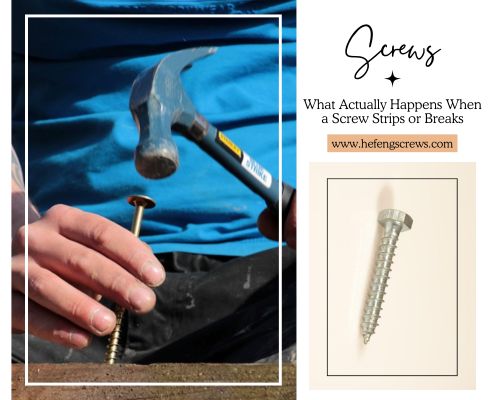
Breakage, on the other hand, happens within the shank. This is especially noticeable in cases of drywall screws breaking, where the screw appears strong but snaps suddenly under stress. That's because many hardened screws are designed for penetration efficiency rather than flexibility.
In both cases, the root problem is the same: the screw is being pushed beyond what its design or the installation conditions can handle.
On paper, screw stripping is often blamed on using the wrong bit. In the field, it's usually more subtle than that. Even when the correct bit is selected, slight wear on the tip or debris inside the screw recess can reduce contact just enough to cause slipping.
Another common situation involves speed. Many installers rely on high RPM settings to improve efficiency, but speed reduces control. The moment the bit loses full engagement, it starts shaving the head. This is one of the most overlooked reasons behind why do screws strip during repetitive work.
Material resistance also plays a role. When driving into dense wood or layered materials without a pilot hole, the screw meets increasing resistance as it goes deeper. If the torque isn't adjusted accordingly, the head becomes the weak point and begins to deform.
Learning how to prevent screw stripping is really about control rather than force. Experienced installers rarely push tools to their maximum settings. Instead, they adjust torque so the screw seats firmly without excessive pressure.
Bit condition is equally important. A slightly worn bit might still “fit,” but it won't hold under load. Swapping bits regularly is a small habit that makes a big difference over time.
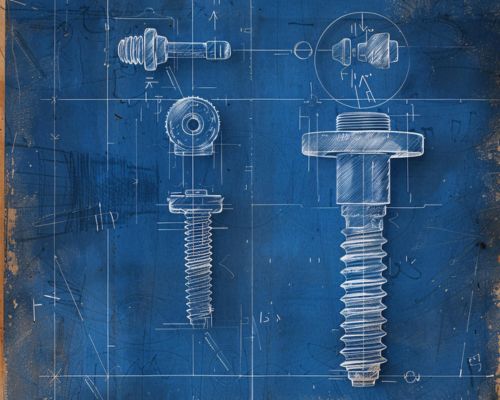
For tougher materials, pre-drilling is often the simplest solution, even if it feels like an extra step. Reducing resistance at the start allows the screw to drive more smoothly and minimizes the chance of stripping halfway in.
It's also worth paying attention to how the tool is held. Keeping steady, direct pressure in line with the screw helps maintain full contact between the bit and the head. This alone can significantly reduce stripping in repetitive tasks.
A lot of installation problems start before the screw even touches the material. Using the wrong type of fastener is one of the main reasons why screws break during installation in otherwise normal conditions.
Drywall screws are a good example. They're designed for fastening gypsum board to studs, not for structural load. When used in hardwood or load-bearing joints, failures like drywall screws breaking are almost inevitable.
Material compatibility matters just as much. Screws designed for wood behave differently in metal, and vice versa. Thread design, coating, and core hardness all influence performance under load.
In practice, choosing the right screw often eliminates the need to troubleshoot issues later. It's one of the simplest ways to prevent screw stripping without changing tools or technique.
From manufacturing feedback, drywall screws breaking is one of the most frequently reported issues in bulk applications. The reason is not necessarily poor quality, but design limitations. These screws are intentionally hardened so they can penetrate drywall cleanly and hold in place without bending.
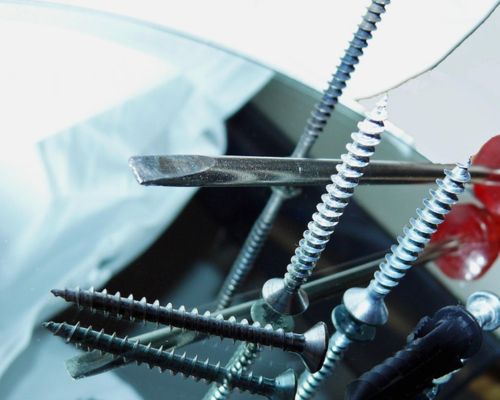
The trade-off is reduced ductility. When subjected to bending forces or high torque, they don't deform — they snap. This becomes obvious when they're used in thicker materials or when the driver applies uneven pressure.
Another common issue is depth control. Driving drywall screws too deep weakens the connection and increases stress on the screw body. Using a depth-sensitive driver or adjusting technique can prevent this without slowing down installation.
At the end of the day, issues like stripping and breakage are less about defects and more about interaction — between tool, screw, and material. Knowing why do screws strip is the first step toward improving consistency and efficiency.
By paying attention to torque control, alignment, and screw selection, it becomes much easier to prevent screw stripping and reduce failures. The same principles apply when addressing why screws break during installation, especially in demanding environments.
Even common problems like drywall screws breaking can be minimized with the right approach. In most cases, small adjustments lead to better results, less waste, and a smoother installation process overall.
At Hefeng Group, we focus on manufacturing high-performance fasteners designed to reduce common issues such as stripping and breakage in real working conditions.
Our screws are produced with strict control over material selection, heat treatment, and dimensional accuracy to ensure stable torque performance and improved durability. This is especially important in preventing problems like drywall screws breaking or premature head wear during high-speed installation.
In addition to standard specifications, we also support customized fastener solutions based on specific project requirements, including size, coating, and performance adjustments. All products are manufactured in compliance with CE standards and can be supported with third-party inspection to meet international quality and compliance expectations.
Whether for drywall systems, wood construction, or industrial applications, choosing the right fastener supplier can significantly reduce failure rates and improve overall efficiency. By combining proper installation practices with reliable products, it becomes much easier to prevent screw stripping and achieve consistent results across projects.

Hefeng Group focuses on manufacturing and supplying screws for real construction needs.
Over the past 10 years, we’ve worked with customers across North America, South America, and Southeast Asia, learning that consistency matters most in this business...[ Read More >>]


