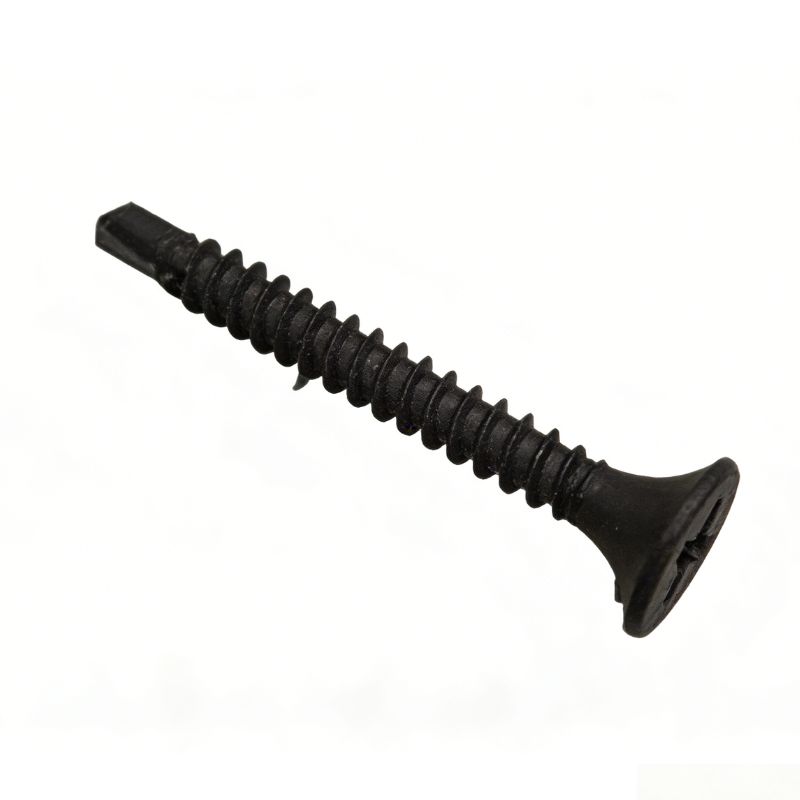
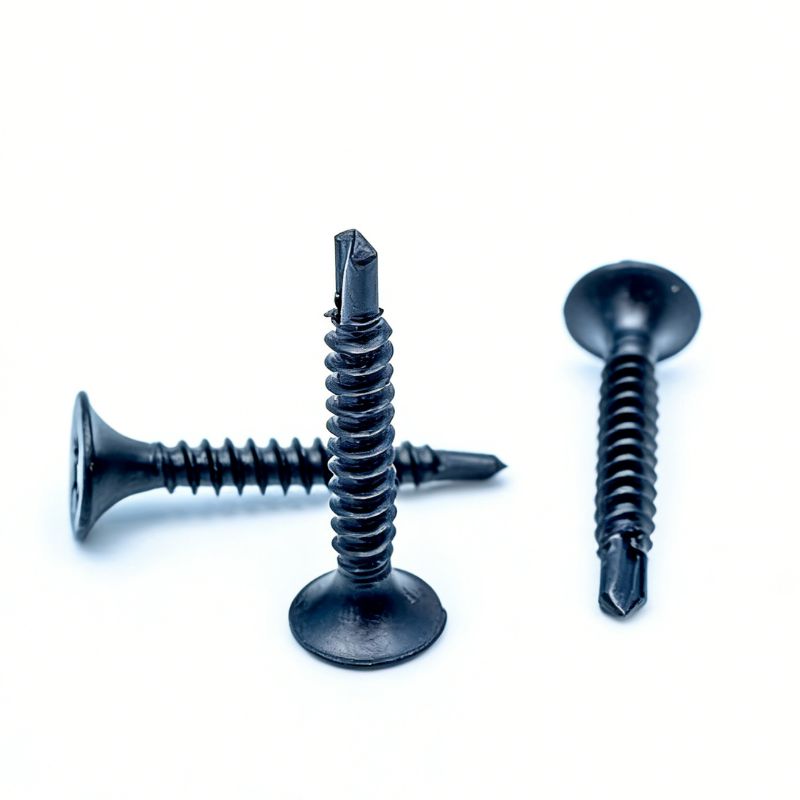
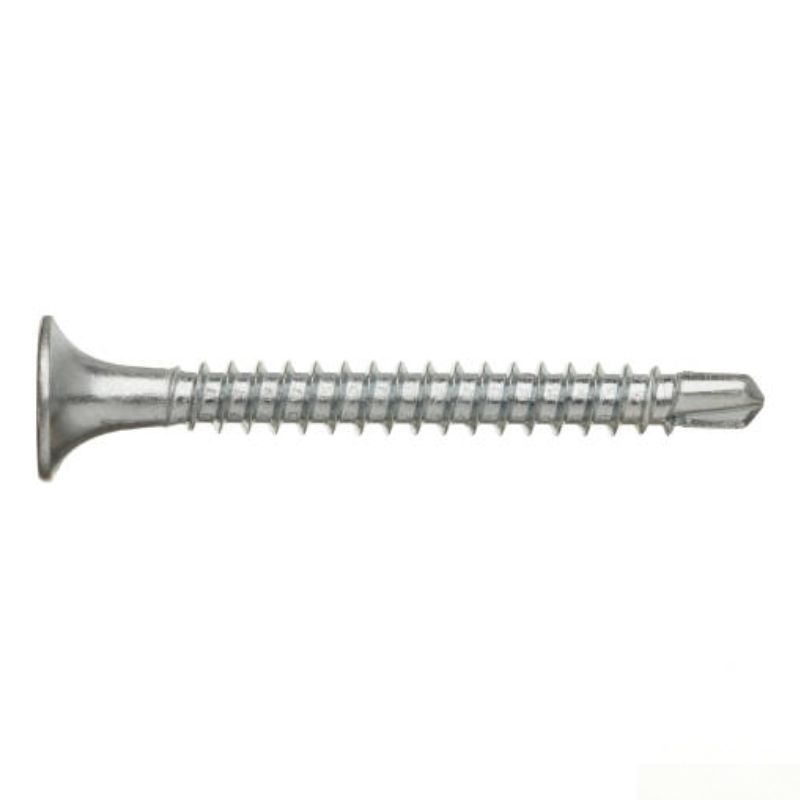
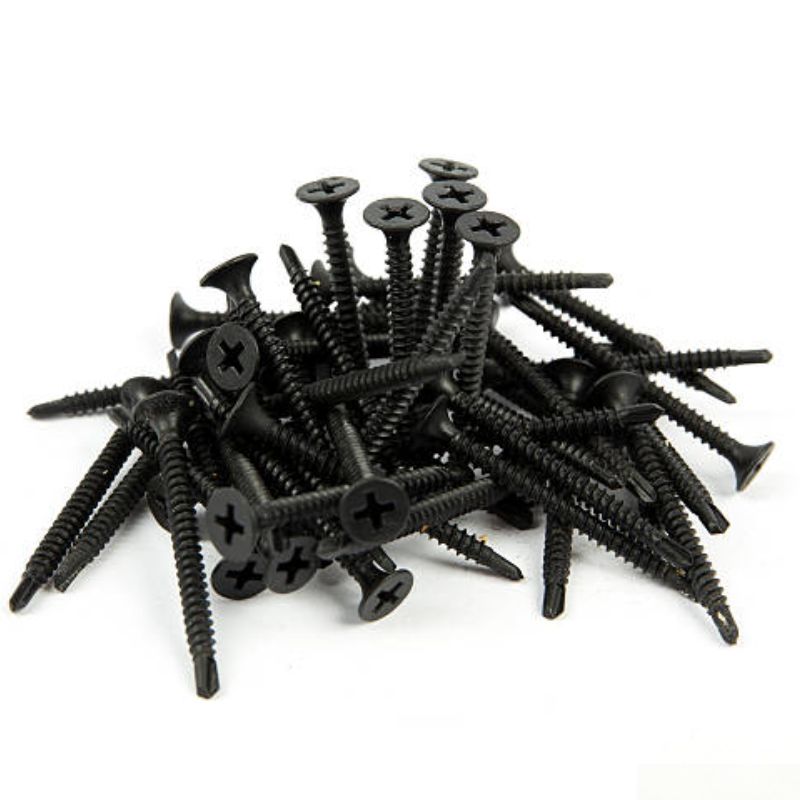
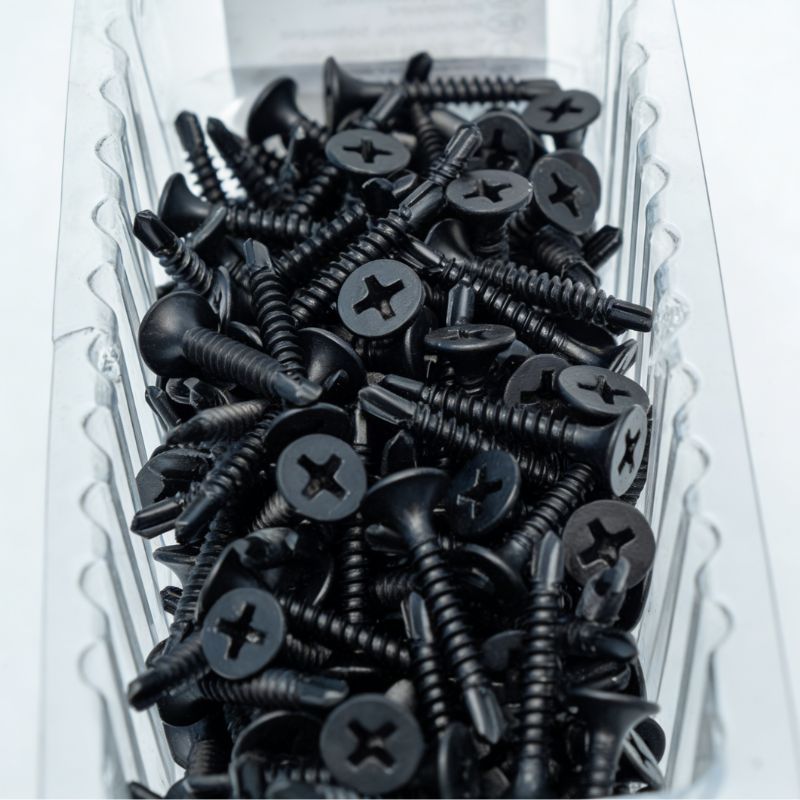
Self drilling drywall screws are designed for fastening drywall directly into metal studs without pre-drilling. Featuring a drill-point tip, these screws combine drilling, tapping, and fastening in one operation, improving installation efficiency and reducing labor costs.
| Screw Size (Gauge) | Diameter (mm) | Length (inch) | Length (mm) | Drill Point |
|---|---|---|---|---|
| #6 | 3.5 | 1/2" | 13 | Tek #2 |
| #6 | 3.5 | 3/4" | 19 | Tek #2 |
| #6 | 3.5 | 1" | 25 | Tek #2 |
| #6 | 3.5 | 1-1/8" | 28 | Tek #2 |
| #6 | 3.5 | 1-1/4" | 32 | Tek #2 |
| #6 | 3.5 | 1-5/8" | 41 | Tek #2 |
| #6 | 3.5 | 2" | 50 | Tek #2 |
| #7 | 3.9 | 1" | 25 | Tek #2 |
| #7 | 3.9 | 1-1/2" | 38 | Tek #2 |
| #8 | 4.2 | 1" | 25 | Tek #2 |
| #8 | 4.2 | 1-1/2" | 38 | Tek #3 |
| #8 | 4.2 | 2" | 50 | Tek #3 |
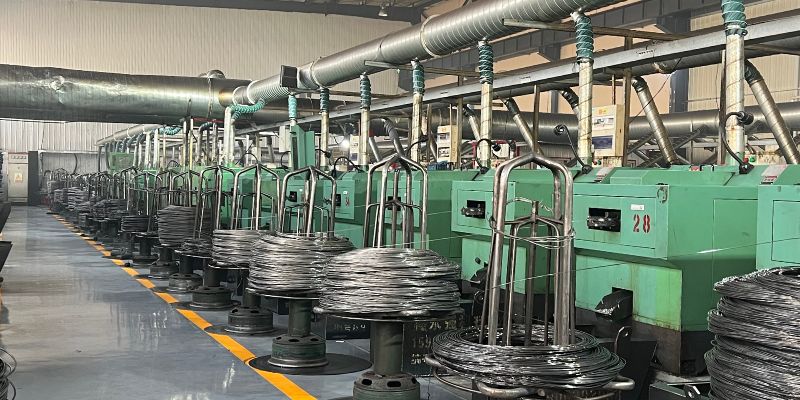
Self-drilling drywall screws are produced from high-quality carbon steel wire (typically C1022), which is cleaned and pre-treated to ensure good formability. The wire is drawn to the specified diameter and then fed into automatic cold heading machines, where the head and drive recess are formed in one high-speed operation.
After heading, the blanks go through thread rolling to form precise, high-strength threads via cold forming, not cutting. The drill point is then specially formed to create a sharp, effective cutting geometry for direct metal penetration.
The screws then undergo quenching and tempering heat treatment to achieve a hard surface for stable drilling and a tough core to prevent breakage during installation.
Finally, surface treatments such as black phosphate or zinc plating are applied for corrosion resistance, followed by strict quality control and packaging according to export or OEM standards.
Hefeng Group focuses on manufacturing and supplying screws for real construction needs.
Over the past 10 years, we’ve worked with customers across North America, South America, and Southeast Asia, learning that consistency matters most in this business...[ Read More >>]


